PPC or SEO First? A Plain-English Guide for Birmingham Businesses
By Junaid Mazhar
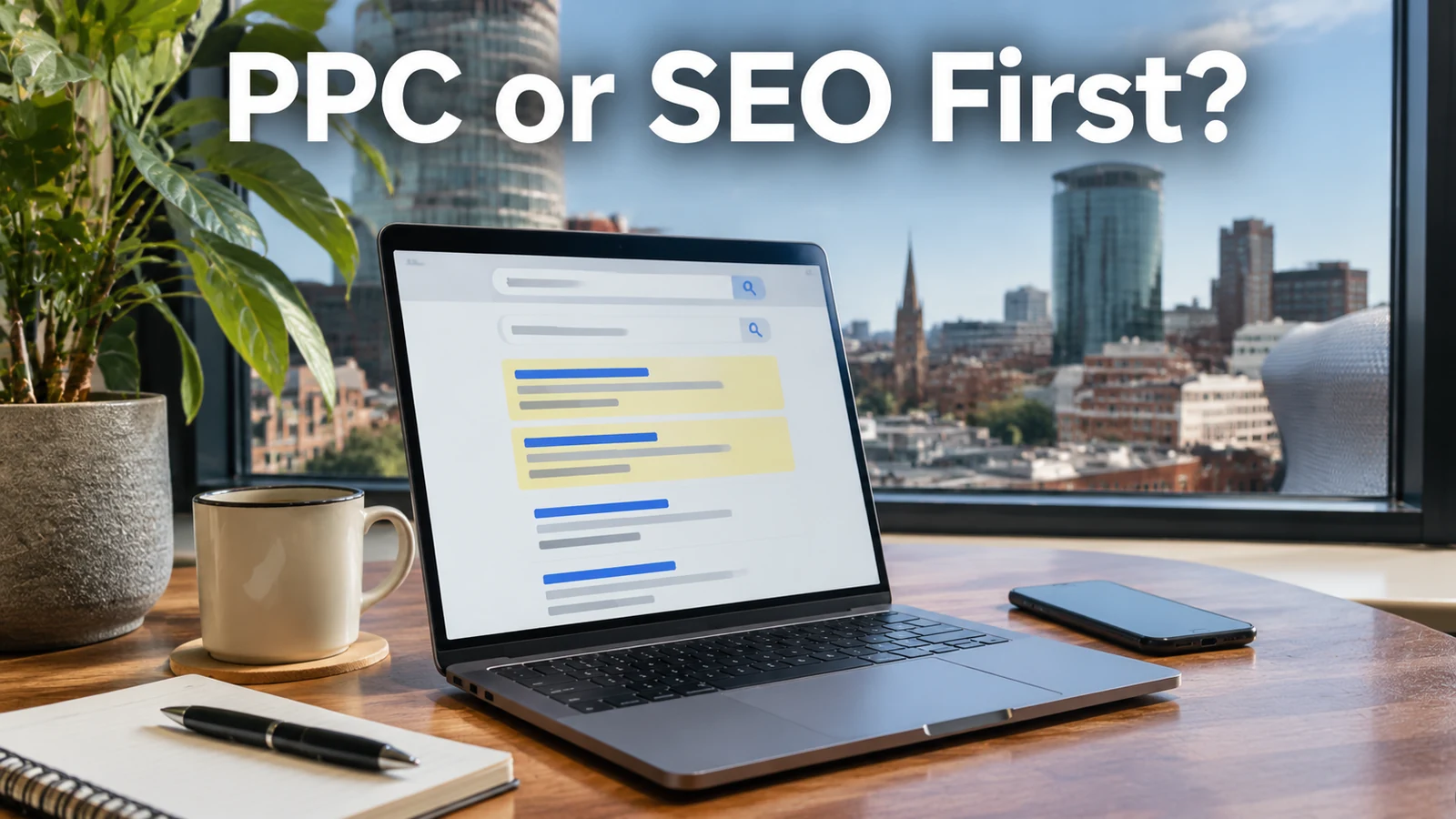
If you run a business in Birmingham or the wider West Midlands, you have probably been told two opposite things: "You need Google Ads to get leads now" and "Ads are a waste, invest in SEO." Both can be true. The right starting point depends on your goals, your budget, your market and how ready your website is.
This guide explains the difference between PPC and SEO in plain English, the questions that usually decide which to start with, and a simple plan for testing your choice. It is written for owners and managers, not marketing specialists.
Short answer: should you start with PPC or SEO?
- Start with PPC (Google Ads) if you need enquiries soon, you are launching a new service or location, demand is seasonal, or you want to test which searches and offers actually bring in customers.
- Start with SEO if you can wait for results to build, your services are searched for in a specific area or niche, and you want a long-term source of enquiries that does not stop when you stop paying for clicks.
- Run both when your budget and time allow each one to be done properly. Splitting a small budget too thinly usually means neither works well.
Whichever you choose, fix the basics first: a clear website, a working way to contact you and tracking that shows which enquiries came from where.
What is the difference between PPC and SEO?
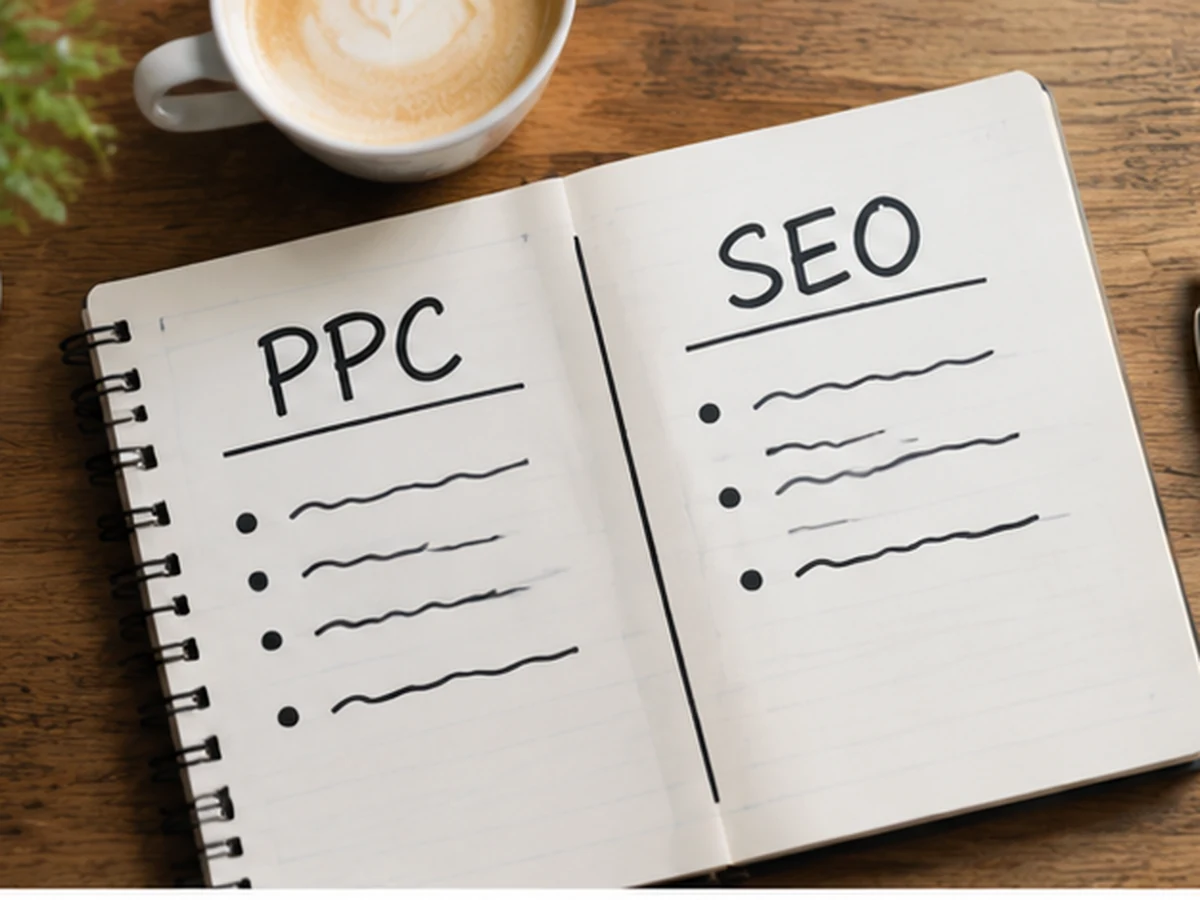
PPC: paying for visibility
PPC stands for pay-per-click. With Google Ads, you bid to show adverts when people search for certain terms, and you pay when someone clicks. Your ads can appear at the top of the results as soon as a campaign is approved.
The key features of PPC are:
- Speed: ads can start showing quickly;
- Control: you choose keywords, locations, times of day and daily budgets;
- Clear testing: you can see which searches, ads and pages lead to enquiries;
- It stops when you stop paying: switch the budget off and the traffic stops too.
SEO: earning visibility
SEO stands for search engine optimisation. It is the work that helps your website appear in the unpaid ("organic") results and in Google Maps. That includes your Google Business Profile, service pages, technical health, helpful content and reviews.
The key features of SEO are:
- It takes time: results build gradually and are not guaranteed;
- It compounds: good pages can keep bringing in visitors for a long time;
- You do not pay per click, but you do invest time or budget in the work;
- Less direct control: Google decides what ranks, and competitors are working on it too.
Neither channel is "better" in every situation. They do different jobs.
Five questions that decide which to start with
Work through these in order. The first clear answer often settles it.
1. How soon do you need new enquiries?
If you need work in the next few weeks, perhaps you have just opened, launched a new service or have a quiet diary, PPC is usually the faster way to appear in front of searchers. SEO rarely produces enquiries that quickly, especially for a new website.
If your diary is reasonably full and you are planning for the year ahead, you have time to invest in SEO and let it build.
2. Is a click likely to be worth paying for?
PPC works when the value of a customer is high enough to cover the cost of the clicks it takes to win one. Before you spend, think about:
- your average profit per job or sale;
- roughly how many enquiries turn into customers;
- how competitive the searches are in your trade.
You can see estimated click costs for your own keywords in Google's Keyword Planner. If clicks look expensive compared with what a customer is worth, PPC may only work once your website converts well, or it may be better to put the effort into SEO first.
3. Can you realistically win the organic results?
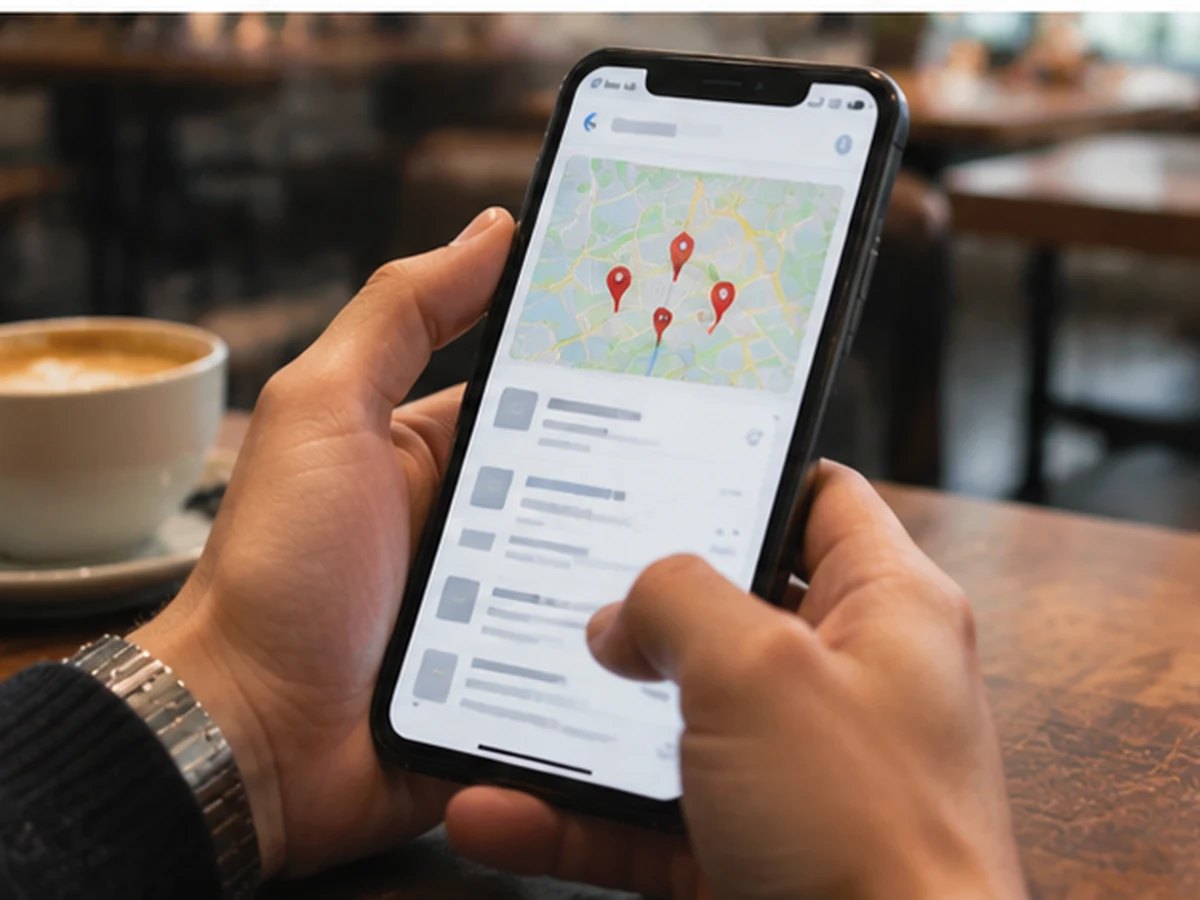
Search for your main services the way a customer would, for example "accountant Edgbaston" or "plumber Sutton Coldfield". Look at who appears in the map results and the organic results.
- If page one is mostly small local businesses like yours, SEO is often winnable.
- If it is dominated by national brands, directories and comparison sites, broad organic rankings will be hard, and PPC, plus SEO focused on more specific searches, may be more realistic.
Birmingham is a big, competitive city, but many searches are local to a district or a specific service. That is where a smaller business can compete.
4. Is your website ready to convert visitors?
Both channels send people to your website. If the page is slow, unclear or hard to use on a phone, you will waste paid clicks and struggle to rank. Before you spend on either, check that:
- each main service has its own clear page;
- your phone number and contact form work and are easy to find on mobile;
- the page explains who you help, where, and what happens next;
- you can track calls and form enquiries.
Our guide to improving your SEO conversion rate covers this in more detail, and much of it applies to paid traffic too.
5. How much time and budget can you commit?
PPC needs someone to set up campaigns, write ads, add negative keywords, review search terms and adjust bids regularly. SEO needs someone to improve pages, publish helpful content, manage your Google Business Profile and earn reviews.
If you can only fund one properly, pick one. A well-run single channel usually beats two half-managed ones.
When PPC usually makes sense first
PPC is often the better starting point when:
- you are a new business or have a new website with little organic visibility;
- you are launching a new service or location, for example opening a second site in Solihull;
- your demand is seasonal, such as heating, garden services or event-based work;
- you offer urgent or emergency services where people search and call straight away;
- you want to test offers and messaging quickly before investing in content;
- your organic results are dominated by big brands you cannot outrank soon.
The main risk with PPC is spending without tracking. If you cannot see which clicks led to calls or forms, you cannot tell whether the campaign is working. Use clear landing pages and tag your links properly; our free UTM builder helps you label campaign links so you can see them in your analytics.
When SEO usually makes sense first
SEO is often the better starting point when:
- your customers research before they buy, such as professional services, B2B services or specialist trades;
- you serve a clear local area or niche where the competition is beatable;
- clicks in your trade are expensive compared with what a customer is worth;
- you can wait for results while the work builds;
- you want an asset you own: pages and a profile that keep working even when you are not paying for ads.
For local businesses, a lot of SEO starts with your Google Business Profile and service pages rather than complicated technical work. Our guide to SEO for small businesses walks through the main steps.
When to run both together
Running PPC and SEO together can work well when you have the budget and time for both. They support each other:
- PPC data can guide SEO. The search terms report shows which phrases bring enquiries, which helps you decide which pages and content to build.
- SEO can reduce reliance on ads over time. As organic visibility grows for some searches, you may be able to lower bids or pause those keywords.
- Both benefit from the same improvements. Clearer pages, faster load times and better calls to action help paid and organic visitors alike.
A common pattern is to start PPC on your most important services while SEO work begins in the background, then review the balance every few months.
A simple 90-day plan for a Birmingham business

This is a starting framework, not a promise of results. Adjust it to your business.
Days 1 to 30: get the foundations right
- Decide on one or two priority services and the areas you serve, such as Birmingham city centre, Edgbaston, Solihull or the wider West Midlands.
- Check that each priority service has a clear page with a strong call to action.
- Set up conversion tracking for calls and forms, and make sure Google Analytics and Search Console are connected.
- Claim and complete your Google Business Profile with accurate details and categories.
Days 31 to 60: launch your chosen channel
- If PPC first: launch a tightly focused Search campaign on your priority services and locations, with a daily budget you are comfortable with, and review search terms weekly.
- If SEO first: improve your priority service pages, add helpful content that answers real customer questions and start asking happy customers for reviews.
Days 61 to 90: review and decide
- Look at the enquiries, not just clicks or impressions. Which channel brought real, relevant leads?
- For PPC, cut search terms that waste money and put more budget behind the ones that bring enquiries.
- For SEO, check Search Console for the queries you are starting to appear for and improve the pages behind them.
- Decide whether to continue, adjust or add the second channel.
Common mistakes to avoid
- Judging SEO too soon. A few weeks is rarely enough to see what SEO can do.
- Running ads to the homepage. Send paid traffic to the page that matches the search.
- No tracking. Without conversion tracking you are guessing.
- Broad, untargeted ads. Very broad keywords and locations can spend budget on searches that will never become customers.
- Chasing rankings instead of enquiries. A top position for a phrase nobody buys from is not worth much.
- Believing guarantees. Nobody can guarantee a first-page ranking or a fixed number of leads. Be wary of anyone who does.
If you are comparing agencies to help, our checklist on how to choose an SEO agency in Birmingham lists the questions worth asking.
Frequently asked questions
Is PPC or SEO better for a small business?
Neither is better in every case. PPC is usually better for quick enquiries, testing and seasonal demand. SEO is usually better for long-term visibility in a local area or niche. Many businesses start with one and add the other later.
How long does SEO take to work?
It varies with your website, competition and how much work is done. SEO builds over months rather than weeks, and results are never guaranteed. Be cautious of anyone promising fixed timescales.
How quickly can Google Ads bring enquiries?
Ads can start showing soon after a campaign is approved, so PPC can bring visits quickly. Whether those visits become enquiries depends on your targeting, budget, offer and landing page.
Can I stop PPC once SEO starts working?
Sometimes, for searches where you rank well organically. Many businesses keep some PPC running for their most valuable services or competitive terms. Review the data before switching anything off.
Do I need a big budget for Google Ads?
You need enough budget to gather useful data on your priority services. A small, tightly focused campaign is usually better than a large budget spread across too many keywords and areas.
Should a new Birmingham business start with PPC or SEO?
A new business with a new website often starts with PPC to get early enquiries and learn which searches work, while setting up the SEO foundations, such as a Google Business Profile and clear service pages, at the same time.
Talk to Linkedo about PPC and SEO
If you would like help deciding where to start, Linkedo offers SEO services and Google Ads management for businesses across the UK, including Birmingham and the West Midlands. Call +44 7927 969991, email info@linkedo.co.uk or use the contact page. We are available 24 hours a day, 7 days a week. More practical guides are on the Linkedo blog.
About the author
Junaid Mazhar · SEO Director