What Is AEO (Answer Engine Optimisation) and How to Choose an Agency in Leicester
By Junaid Mazhar · SEO Director · Published 19 November 2026
A restaurant owner who needs custom packaging might ask an AI tool, “Which Leicester suppliers can deliver printed takeaway boxes, and how much notice do they need?” The question covers a product, a location and a deadline. A supplier with those details on a clear, accessible page gives the buyer somewhere to check the answer and take the next step.
That is the idea behind answer engine optimisation, or AEO. If you run a business in Leicester, you can start by looking at the questions customers already ask. If you’re comparing agencies, use those same questions to see how each agency would improve your site and report what happens afterwards.
What is AEO (answer engine optimisation)?
Answer engine optimisation is the work of making information on your website easy for people to find and for search and AI tools to understand. When a tool generates an answer, it may summarise information from a web page and link to it as a source. The source link is often called a citation.
Imagine a Leicester packaging supplier has a page about printed takeaway boxes. Near the top, it explains where it delivers and says that the lead time starts once the customer approves the artwork. It then tells readers what to send when asking for a delivery date. A buyer can quickly see which details are settled and which need confirming. The page also gives an answer tool a clear passage to draw on if it uses the page.
You may see AEO discussed alongside generative engine optimisation, or GEO. GEO usually refers to visibility in answers produced by generative AI. The terms overlap, and agencies may define them differently. Google AI Overviews are a feature in Google Search that can display a generated summary with links to supporting pages. For more on how these terms fit together, read what AI SEO means.
How AEO differs from SEO and how they work together
Search engine optimisation, or SEO, helps people find relevant pages in search results. AEO focuses on whether those pages contain clear answers that a search or AI tool can use. A single page can do both jobs.
Take the packaging supplier again. Its product page might appear in Google when someone searches for printed takeaway boxes in Leicester. A buyer could click through and browse sizes and materials. Someone asking about delivery times might instead see a generated answer that cites the same page for its explanation of when the lead time starts. In each case, the reader needs a page with enough detail to make a decision.
The work starts with the same basics. Give each important page a clear purpose. Link to it from relevant parts of your site. Use headings that describe the information below them, and keep service details current. Make sure search engines can access the page. If your site has pages that are hard to find or have outdated information, those are sensible places to start when looking at SEO services.
AI Overviews are one part of a search results page. The format a customer sees can depend on the question they ask. For a wider look at AI Overviews and other changes to search results, see SEO trends in 2026.
Why AEO matters for Leicester businesses

Local searches often come down to practical details. A shopper might want to know whether a retailer offers same-day collection. A homeowner could ask whether a tradesperson covers their postcode. Someone looking for an accountant might want to know if they can book a first meeting remotely. A manufacturer might be asked what materials it works with or whether it can make a small trial batch.
Each question points to something a business can explain on its website. Put collection details on the relevant product or shop page. Cover call-out areas on the service page. Explain appointment options where people book, and put material or order requirements where buyers compare manufacturing services. For more on local search support, visit the Leicester page.
If you serve Leicester and wider Leicestershire, describe what that means in practice. A company might deliver across the county while limiting site visits to certain towns. Say which areas you cover for each service and what a customer should provide if you need to check their address. That level of detail can help someone decide whether to enquire.
If your business serves Bristol, the same checks apply to your local pages there.
What AEO work actually involves
Start with the wording customers use. Ask your sales or support team what people want to know before they place an order, make a booking or request a quote. Look at recent enquiries and compare them with relevant searches in Search Console. If people keep asking about the same point after visiting a page, check where the answer sits and how clearly it is explained.
Match each question to the page where a reader would expect to find it. Put a short answer under a clear heading, then explain any conditions or steps. A page about custom orders could explain what artwork to send, when it will be checked and how approval affects the schedule. When a page gives specialist advice, identify who wrote or checked it where that helps readers judge the information. Google’s guidance on helpful content also recommends creating content primarily to help the people who come to your site.
Review the details that identify your business, including its name, services and coverage. Check that your website and Google Business Profile agree where they describe the same facts. When you change something like collection hours, update the places where customers rely on that information.
Structured data is code that describes information on a page. Where relevant, it should match what visitors can see, such as the hours listed on a shop page. Google says its AI search features require no special AI markup.
How to tell if a company is really doing AEO
Give each agency the same starting point: a page you want to improve and a question customers regularly ask about that service. Ask what the agency would change first and why. For example, if customers ask about delivery before they order, the agency might suggest making the coverage and lead-time details easier to find. Ask it to show where the answer would go and what information it needs from you to write it accurately.
Find out what the work includes. A proposal could cover a page audit, a list of priority customer questions, examples of page edits and a sample report. Ask who will write the changes, who will check the facts and who will publish them. You should be able to tell what will be done and what your team needs to supply.
Treat promised ChatGPT placements and search volumes without a named source as red flags. If a proposal uses terms such as “AI SEO visibility”, ask what the agency means and how it will report what it finds. A dated log of prompts and observed citations tells you more about the work than a score with no explanation of how it was calculated.
One question worth asking every agency is, “Which page would you improve first, what would you change, and how would you check what happened afterwards?” Use the answers alongside this guide to choosing an SEO agency in Leicester.
A practical AEO checklist for a Leicester business
Start with a service, product or location page that already matters to your business. Use this checklist to find changes you can make and check before applying the same approach to other pages.
- List common questions. Pull them from calls, emails and enquiry forms. Keep the words your customers use.
- Match each question to a page. Put information about a specific service on the page for that service.
- Give the direct answer early. If customers keep asking where you deliver, state the area clearly near the top of the page.
- Add the detail people need next. Explain any conditions, what customers should send you or how they can check availability.
- Use descriptive headings. A heading like “Which areas do we deliver to?” helps readers find the answer quickly.
- Check local details. Review service areas, hours and contact details on your website and Google Business Profile.
- Inspect the priority pages. Check whether Google can access each page and whether it is indexed.
- Check any structured data. Make sure it accurately describes information visitors can see.
- Record a baseline. Save the date, page address, current search impressions and clicks, and any citations you observe before making changes.
Keep a simple record of what you changed and when. That gives you something concrete to refer to when you check the pages again.
How to measure AEO and where reporting is limited
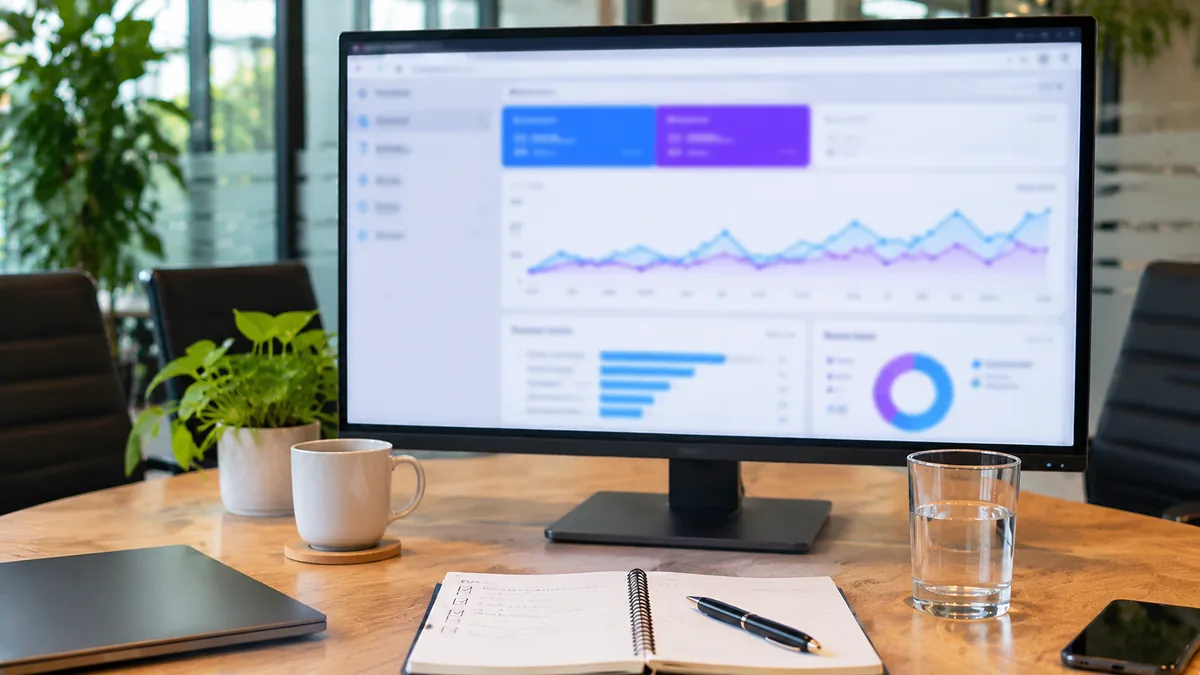
Use Search Console to track impressions and clicks for the pages you update. Impressions show how often a link to your site was shown in search under Google’s reporting rules. Clicks show visits started from those results. Google includes activity from AI Overviews and AI Mode in the overall Web search data in Search Console. Those totals give you a view of search performance, with limited detail about which individual AI answers contributed, as Google explains in its AI features documentation.
Watch searches for your business name and any traffic your analytics tool attributes to AI services. Brand searches can change for many reasons, including advertising and word of mouth. AI referrals show visits where the source was recorded. Someone may also read an answer, then search for your business separately.
For a direct check, choose a small set of customer questions and try them in the same tools at regular intervals. Record the date, exact wording, tool and page cited, if any. You can repeat the check later, though the answer may change even when you ask the same question.
Keep citations, visits and enquiries in separate columns. A citation records where you saw a page used as a source. A visit records someone reaching the site. An enquiry records a further action. That distinction helps you explain what you observed and where the source of an enquiry is still unclear.
Frequently asked questions
1. What is AEO (answer engine optimisation)?
AEO means improving website content so people can find clear answers and search or AI tools can understand them. For a business, that could mean explaining delivery times, appointment options or service coverage on the pages where customers look for them.
2. Is AEO the same as SEO or AI SEO?
SEO covers how people find your website through search. AEO focuses on how clearly your pages answer questions. AI SEO is often used as a broader term for work on visibility in AI-powered search. Ask an agency what its proposal covers, as the terms can overlap.
3. Do Leicester businesses need an AEO agency, or is this part of SEO?
A team that already handles technical SEO, content and reporting can often add AEO to its work. If you’re unsure, give your team one important customer question and ask how it would improve the relevant page and check the outcome.
4. Can you guarantee appearances in Google AI Overviews or ChatGPT?
No. Each platform decides which sources to show, and answers can vary. Ask the agency to commit to work you can check, such as specific page improvements and documented citation checks.
5. How do you measure AEO results?
Track search impressions and clicks for updated pages, check a set of prompts for citations, and record identifiable AI referrals and enquiries. Report each measure on its own and flag where the source is unclear.
6. What should I ask an AEO agency in Leicester before hiring them?
Ask, “Which customer question would you tackle first, and what exactly would you change on our site?” Then ask to see how the agency would report its findings, including how it records a citation or a visit.
7. Does AEO also help businesses in Leicestershire?
The same approach applies across Leicestershire. Explain where you deliver, visit or take appointments. If coverage depends on the service or postcode, put those details on the relevant page so customers can check before they enquire.
Talk to Linkedo about AEO and SEO in Leicester
If customers keep asking questions your website could answer, bring a few examples to Linkedo. We can review how your business shows up in search and AI answers, look at the pages customers use to make decisions, and plan the SEO and AEO work together.
Start with a service page you want to improve or a question your team answers often. You can read more about our SEO services or visit the Leicester page before getting in touch.
About the author
Junaid Mazhar · SEO Director