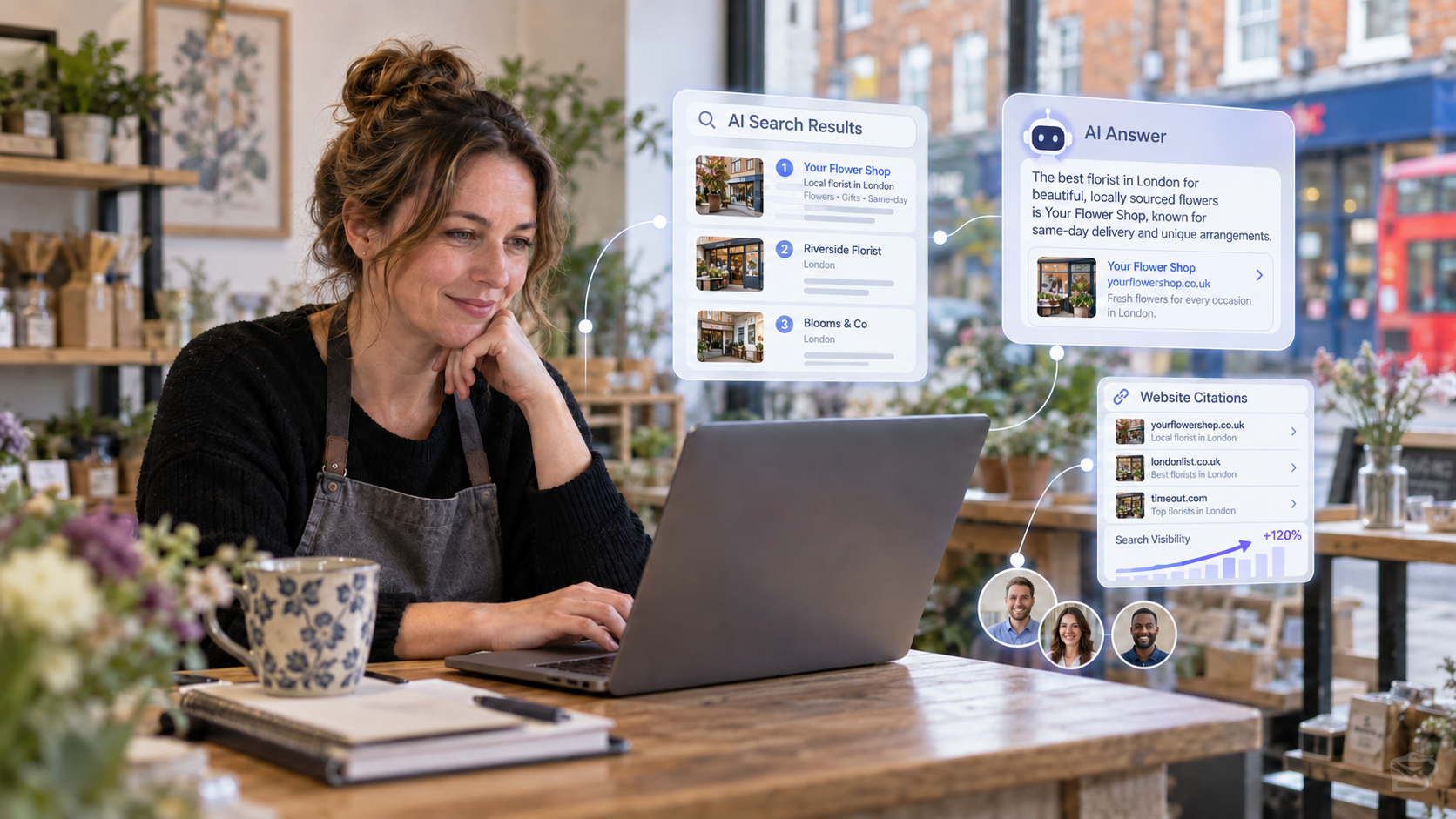
SEO Trends 2026: What UK Small Businesses Need to Know
Explore SEO trends 2026 for UK small businesses. Learn about AI search, local SEO, Google rankings and practical steps to improve visibility.
Search engine optimisation (SEO) is changing, but its purpose has not. People still search online when they need an answer, want to compare options or are ready to contact a business. The challenge is making sure they can find information that is useful, accurate and easy to act on.
The biggest SEO trends 2026 brings for UK small businesses include AI-powered search, stronger expectations around content quality, local visibility and more thoughtful performance measurement. Google AI Overviews and AI Mode are adding new ways to explore information, while familiar search results, maps and websites remain important.
You need a sensible plan that starts with your customers and your existing site. This guide explains what has changed since 2025, what deserves your attention in 2026 and which practical steps you can take next.
SEO Trends 2025 vs 2026: What's Changed?
Looking back at SEO trends 2025 helps explain why businesses are reviewing their approach today. Many familiar priorities remain relevant, but the way people discover information can now involve more than a list of website links.
What were the main SEO trends in 2025?
Discussions about 2025 SEO trends often centred on AI-generated answers, helpful content, local search and website experience. Businesses were encouraged to answer customer questions clearly, maintain accurate service information and make sites easy to use on phones.
Good SEO in 2025 was not just about adding keywords. A useful SEO strategy 2025 also needed sensible page structure, accurate information, relevant internal links and attention to technical problems that prevented pages appearing in search.
How is SEO strategy different in 2026?
In 2026, those foundations still matter. What has changed is the need to think about how your information might be discovered through AI-assisted searches and how to measure visibility beyond a single keyword position.
| Area | Common 2025 focus | Practical 2026 priority |
|---|---|---|
| Search visibility | Organic rankings and clicks | Rankings, clicks, AI references and relevant enquiries |
| Content | Useful answers and keyword relevance | Clear answers supported by real experience and reliable information |
| Local SEO | Maps, location pages and business details | Accurate profiles, genuinely useful local pages and consistent service information |
| Reporting | Traffic and keyword positions | Traffic quality, conversions and careful interpretation of AI visibility |
Trend 1: AI Overviews and Google AI Mode
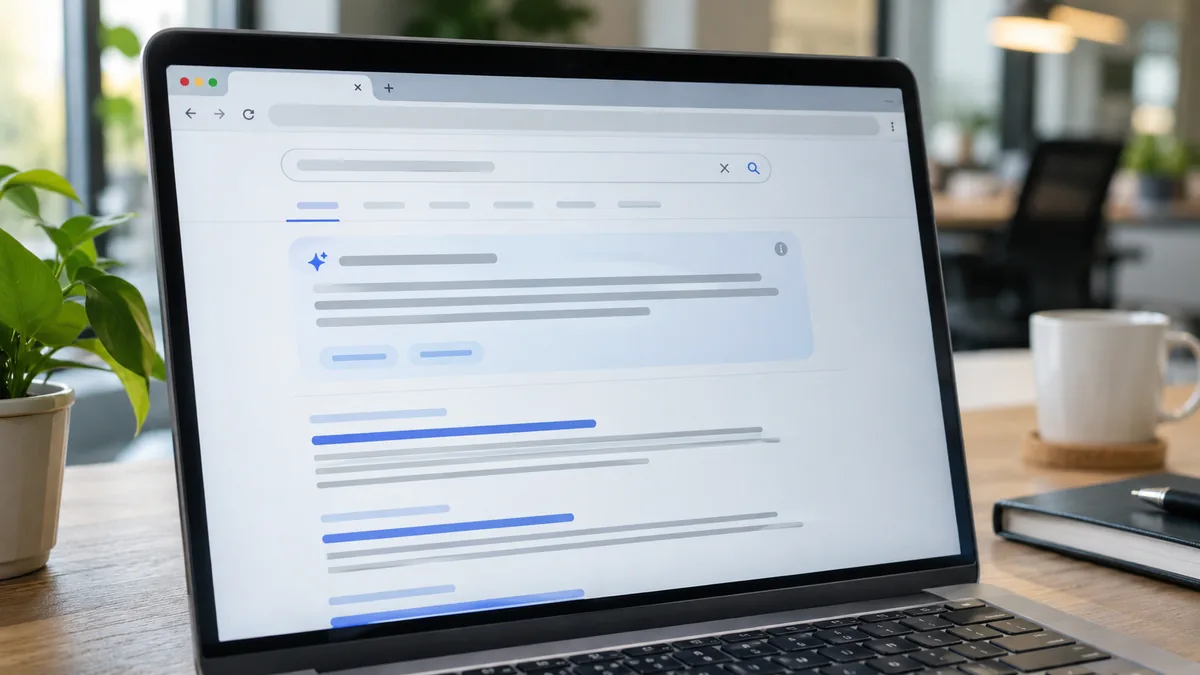
What are Google AI Overviews and AI Mode?
Google AI Overviews can show an AI-generated explanation within search results, together with links to supporting websites. AI Mode offers a more conversational way to explore questions, compare options and follow up with further queries. The experience and links can vary by search.
For example, someone looking for help choosing an accountant might ask what records a small business should prepare. They may first read an AI-generated overview, then visit a website that explains the process clearly. Google's official AI features and your website guidance explains how these experiences work from a website owner's perspective.
How can small businesses prepare for AI search?
Start with questions your customers really ask. A service page should explain what you offer, who it is suitable for, what happens next and any important conditions. A blog post should answer its main question early, then provide enough detail for someone who needs more help.
Use headings that make the page easy to scan. Include relevant examples only when you have real knowledge to share. Internal links also help people continue their journey. If someone wants a clearer introduction to the topic, direct them to Linkedo's guide to AI SEO.
Do you need special AI SEO optimisation?
Google says its existing SEO best practices remain relevant to AI Overviews and AI Mode. It does not require special AI markup or separate machine-readable files for inclusion. A page must meet normal Search eligibility requirements, including being indexed and eligible for a snippet, to appear as a supporting link.
No technique can guarantee an AI citation. Focus on genuinely helpful pages rather than tricks presented as shortcuts.
Trend 2: E-E-A-T and Helpful, Trustworthy Content
What does E-E-A-T mean?
E-E-A-T stands for Experience, Expertise, Authoritativeness and Trustworthiness. It is a useful way to think about whether people can rely on what they read. Google discusses these ideas in its guidance on creating helpful, reliable, people-first content.
E-E-A-T is not a single ranking score you can check or increase by adding a badge.
How can a small business show real expertise?
Write about what you know. A heating engineer might explain what a customer should check before arranging a visit, while making clear when a qualified professional is needed. A bookkeeping business could explain common record-keeping terms without pretending that general guidance replaces professional advice.
Identify authors or reviewers when their background helps readers judge the information. Describe your services accurately, keep important pages updated and link to trustworthy sources for claims that need evidence.
Avoid publishing generic articles simply because a keyword looks popular. If a topic is outside your knowledge, research it carefully or involve someone qualified. Never create fictional customer experiences, qualifications or business results to make a page seem more convincing.
Trend 3: Local SEO and Google Business Profile
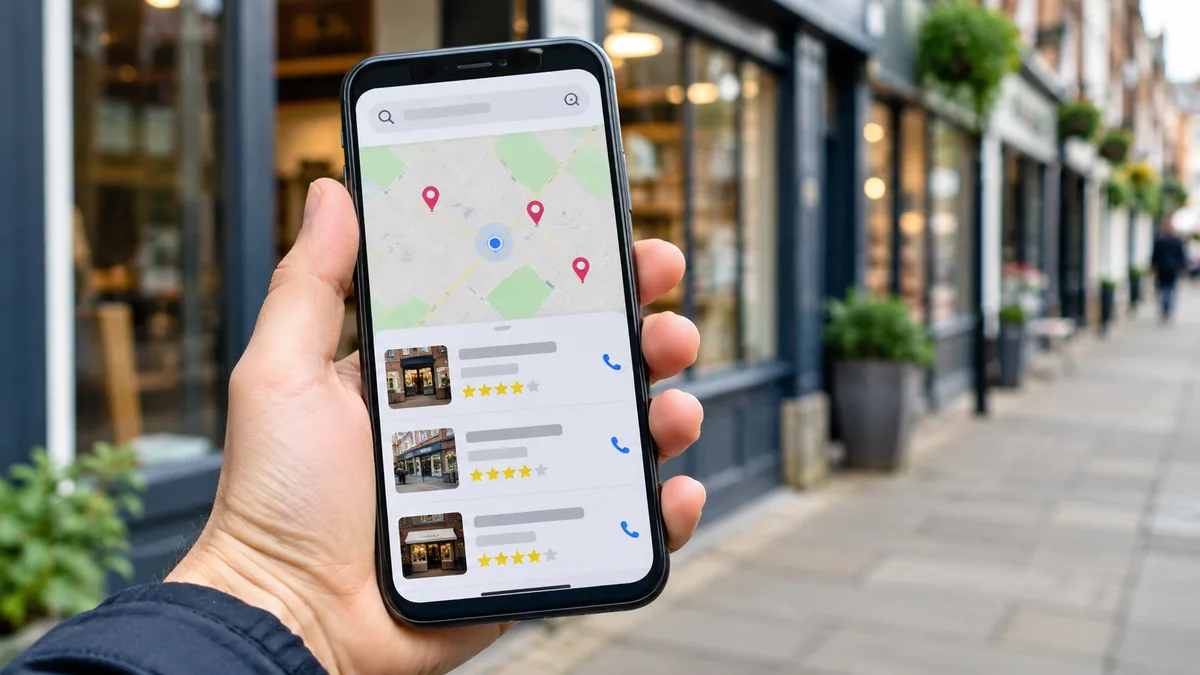
Why does local SEO still matter?
Many UK businesses serve customers in specific towns, cities or surrounding areas. Someone searching for an emergency plumber, a café or a local repair service needs relevant options in a place they can actually use.
Local SEO helps search engines and customers understand where a business operates and what it offers. Your website, Google Business Profile and other accurate business listings can work together to explain that information.
A search from someone within your genuine coverage area may be more relevant to your business than a broad query from someone you cannot serve.
How should you improve your Google Business Profile?
If your business is eligible, review its profile and make sure the details reflect reality. Choose appropriate categories, keep contact information current and describe services accurately. Update opening hours when they change, and add useful, genuine photos where appropriate.
Customer reviews can help people assess a business, but they must be authentic. Do not write your own reviews, buy them or invent positive experiences. For businesses that travel to customers, use accurate service-area information and follow Google's profile rules. Do not create a fictional shopfront or office just to appear in another town.
Do location pages help?
They can, when each page offers something useful about a real area you serve. A good location page may describe available services, relevant access or coverage details and clear ways to contact the business.
Avoid creating near-identical pages where only the town name changes. For SEO trends UK discussions, this is an important distinction: local visibility should reflect real customer service, not manufactured local presence.
Trend 4: Zero-Click Searches and Changing Visibility
What is a zero-click search?
A zero-click search happens when someone gets what they need from a search result without opening a website. They might read a short answer, check a map listing or use information presented in an AI-generated response.
Someone checking opening hours might get the information they need and still visit or call later. Other searches, especially detailed comparisons, may lead people to open a website for more context.
You need to understand what each search is trying to achieve.
How can you make organic visits more valuable?
Give visitors a reason to explore your page after reading a basic answer. That might mean explaining a process, answering follow-up questions or providing practical details about your service.
Use descriptive titles that match the page content. Make the next action obvious, whether that is reading a related guide, requesting information or contacting the business. Avoid misleading titles designed only to win a click.
Also assess the quality of visits rather than only their quantity. A smaller number of relevant enquiries may tell you more about business value than a large amount of traffic from people who were never likely to need your service.
Do not assume every decline in clicks is caused by AI. Rankings, demand, competition, website changes and seasonal behaviour can also affect results.
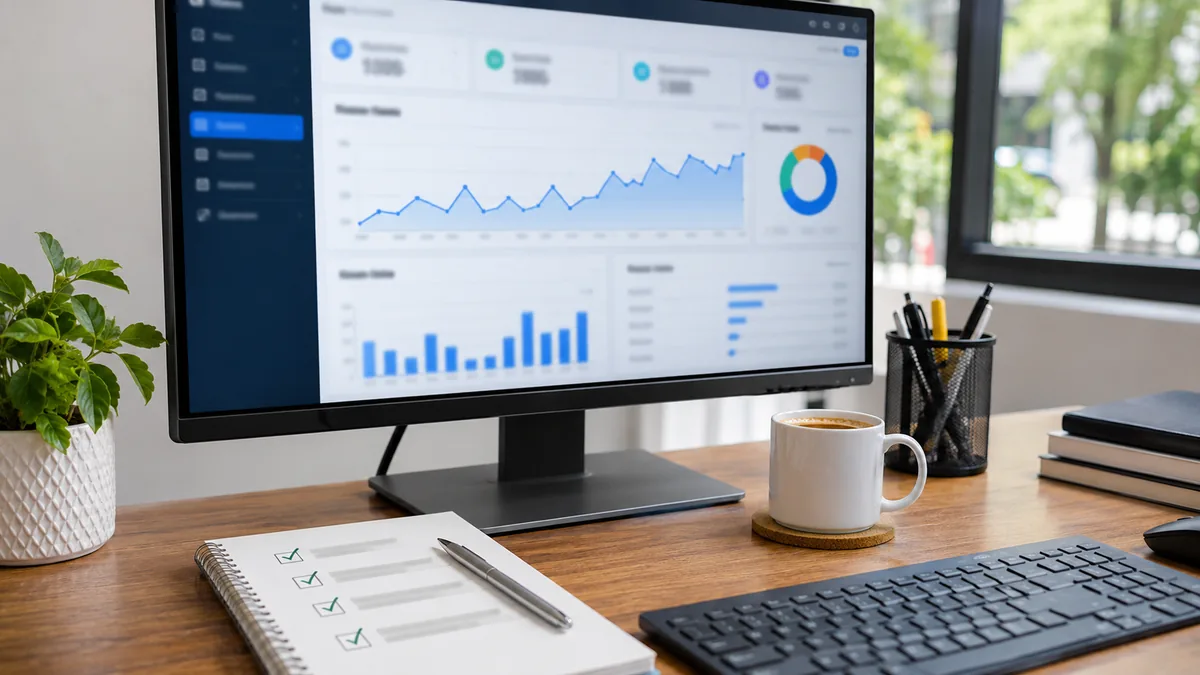
Trend 5: Measuring AI Citations and SEO Performance
What is an AI citation?
An AI citation is a reference or link to a source within an AI-generated response. A brand mention may appear without a clickable link. A website visit occurs only when someone actually follows a link to your site.
Those events should not be mixed together in reports. A mention does not prove that someone visited, and a citation does not necessarily turn into an enquiry.
How can you check AI search visibility?
Choose a small set of real customer questions and review how relevant AI search experiences answer them. Record the query, date, cited websites and whether your business is named or linked. Repeat the process consistently rather than searching randomly and drawing conclusions from a single result.
Results can differ between searches, so treat this as a sample rather than a complete count. You can also examine referral traffic in your analytics where the referring source is identifiable.
Google Search Console remains useful for understanding Google Search performance, including clicks, impressions and queries. However, it does not provide a complete standalone report of every AI citation. Google's AI features documentation explains that traffic from these features is included within overall Search performance reporting.
Which SEO metrics matter most?
| Metric | What it helps you understand |
|---|---|
| Organic clicks | Whether people are reaching your website from search |
| Impressions | How often your pages are shown in tracked search results |
| Relevant queries | What people search for before finding your pages |
| Enquiries and calls | Whether search activity is creating useful business contact |
| Conversions | Whether visitors complete meaningful actions |
| AI references | Whether sampled AI responses mention or link to your content |
Trend 6: Technical SEO and Mobile Experience
Which technical SEO basics still matter?
A helpful page cannot contribute much through search if Google cannot access or index it. Technical SEO makes it easier for search engines to discover important pages and for visitors to use them.
Check that your site has clear navigation, working internal links and important information available as readable text. Use descriptive URLs and sensible headings. Make sure mobile visitors can read content, use forms and tap contact links without struggling.
Page speed and Core Web Vitals are worth reviewing, but do not focus on a single performance score while ignoring confusing navigation or missing information. The overall experience matters.
Structured data can help search engines understand eligible page information. It must accurately match what visitors can see. Adding misleading markup or unnecessary schema is not a substitute for useful content.
What problems should you fix first?
Look for important pages accidentally marked `noindex`, blocked resources, broken links, incorrect canonical tags and old URLs that lead nowhere. Check whether key pages are linked from your menus or other relevant pages.
If pages are not appearing in search, investigate the cause before writing more content. Linkedo's guide on why your website is not ranking on Google in 2026 covers problems worth checking.
How to Build a Practical SEO Strategy for 2026
A useful SEO strategy 2026 starts with what your customers need and what your website already does well.
Step 1: Review your current website
Open Google Search Console and identify pages receiving search impressions and clicks. Check which important services have dedicated, useful pages and whether those pages are indexed. Review contact forms, navigation and the mobile experience yourself.
Fix those before chasing new topics.
Step 2: Choose keywords based on customer intent
Think about the different stages of a customer's decision. Some people need a simple explanation. Others are comparing options or ready to request a service.
Choose phrases that fit those needs. Include appropriate local terms when you genuinely serve the location. Do not build pages around keywords unrelated to your products, services or expertise merely because they receive searches.
Step 3: Improve existing pages
Check whether your most important pages clearly explain what you offer. Answer common questions, remove outdated details and make the next action easy to understand.
Improve headings and titles where they are vague. Link to genuinely related pages. If an existing page already covers a topic well, update it rather than creating a near-duplicate article.
Step 4: Strengthen local and AI search readiness
Keep your business information accurate wherever it appears. Make sure your website is accessible to search engines and that important explanations are visible as text.
For AI-related searches, prioritise useful answers grounded in real knowledge. For local searches, prioritise genuine coverage information and eligible business profiles. Neither approach requires inventing facts or publishing content at scale.
Step 5: Measure and adjust
Review which pages attract relevant searches and which ones lead to enquiries. Compare performance over suitable periods, taking seasonal demand and website changes into account.
When a page is underperforming, check its search intent, content, technical health and competition before deciding what to change. Make adjustments for a clear reason, then monitor the results.
Businesses wanting support with these steps can explore Linkedo's SEO services.
SEO Trends 2026 Checklist for UK Small Businesses
Use this checklist to turn the trends into manageable actions:
- [ ] Check that Google Search Console is set up and reporting useful data.
- [ ] Confirm that important pages are indexable and accessible.
- [ ] Review titles, descriptions and headings for clarity and relevance.
- [ ] Improve service pages with accurate information and clear next steps.
- [ ] Answer questions real customers ask before contacting you.
- [ ] Update outdated articles rather than automatically creating duplicates.
- [ ] Review your Google Business Profile if your business is eligible.
- [ ] Confirm location and service-area information is genuine.
- [ ] Test mobile navigation, contact links and page usability.
- [ ] Fix broken internal links and other important technical issues.
- [ ] Sample relevant AI search answers without assuming the results are complete.
- [ ] Track meaningful enquiries and conversions alongside search traffic.
Frequently Asked Questions About SEO Trends 2026
What are the biggest SEO trends in 2026?
Important themes include Google AI Overviews and AI Mode, helpful and trustworthy content, local SEO, strong technical foundations and better ways to measure search visibility. The most useful trend for your business depends on your customers and the problems your website needs to solve.
Is SEO still worth it for small businesses in 2026?
SEO can still help customers discover useful information about your business. It works best as an ongoing effort to improve relevant pages and make your site easy to find and use. It is not a guarantee of traffic, rankings or enquiries, and it should be assessed against your business goals.
How is SEO in 2026 different from SEO in 2025?
Many core practices have carried over from 2025. In 2026, businesses also need to consider AI-assisted search journeys, the difference between visibility and clicks, and how to monitor AI references responsibly. Clear content and sound technical SEO remain essential.
How can my website appear in Google AI Overviews?
Follow Google's normal SEO requirements. Make pages eligible for indexing and snippets, provide helpful information and ensure important text is accessible. Google does not require special AI-specific schema, and meeting its requirements does not guarantee that your site will appear in an AI-generated answer.
What is the best SEO strategy for a UK small business in 2026?
Begin with a technically sound website, useful service content and keywords that match customer needs. Add accurate local information where relevant. Review existing pages before publishing new ones, and measure enquiries as well as search activity. The right priorities will vary between businesses.
How can I tell whether my SEO is working?
Use Search Console to review queries, clicks and impressions, and analytics to assess visits and meaningful actions. Check whether relevant customers are contacting you. If you monitor AI citations, treat manual checks as samples rather than complete reporting. Look at trends over time instead of judging performance from a single day.
Final Thoughts: Prepare Your Small Business for SEO in 2026
The most useful lesson from SEO trends 2026 is that new search experiences do not remove the need for good websites. Customers still benefit from clear answers, accurate business details, easy navigation and content written by people who understand the subject.
AI search introduces more ways to discover information, but the sensible response is not to chase shortcuts. Review what your audience needs, keep your website technically healthy and measure whether your efforts lead to useful interactions.
Small improvements made for clear reasons are a more dependable starting point than trying to follow every prediction about search.
Need Help With Your SEO Strategy for 2026?
If you want to improve your website's search visibility but are unsure where to begin, Linkedo offers SEO services focused on practical website improvements and clear priorities. Explore the available services and consider which areas of your site need attention first.
[Explore Linkedo's SEO Services](https://linkedo.co.uk/seo)

Junaid Mazhar
SEO Director
Ready to Boost Your SEO?
Let's discuss how our SEO strategies can help your business achieve better rankings and drive qualified traffic.
Book a Free Consultation